
Something is happening in Nigeria on September 14 that has never happened before in the history of African financial markets. The Dangote Refinery is going public. And for the first time, ordinary people like you and me can buy a stake in the company.
We’re talking about a company valued between $40 billion and $50 billion. An IPO that could be the biggest in African history. And a unique dividend structure that pays you in US dollars even though you buy the shares in Naira. Yeah.
In this blog post, I’m going to break down everything. What this IPO is all about, what makes it unique, how much it costs, the risks you need to know, and exactly how you can buy it.
WHAT IS AN IPO?
Before we get into the Dangote specifics, let me explain what an IPO is, because some of you reading may be hearing this term for the first time. IPO stands for Initial Public Offering. It’s the process by which a privately owned company opens its ownership to the public by selling shares on a stock exchange for the first time.
Before an IPO, a company is owned by its founders and private investors. But after an IPO, anyone – you, me, your neighbour – can buy a piece of that company by purchasing its shares on the stock exchange. That’s what an IPO is all about.
Why do companies go public? The reason is mainly to raise money for expansion, allow early investors to realise their returns, and gain access to a larger pool of capital from public markets.
For Dangote Refinery, the company is planning to expand and increase their production per day, and they need money for this. That is one of the reasons for this IPO.
What does it mean for you as an investor? You become a part-owner of the company. If the company grows and becomes more valuable, your shares grow in value too. And if the company pays dividends, which is a share of its profits, you receive that income regularly. It becomes like a passive income for you.
What makes the Dangote Refinery IPO different from any other IPO we’ve seen in Nigeria or Africa before? Because this is about to be the biggest we have seen so far. Let me explain.
WHO IS DANGOTE AND WHAT IS THE REFINERY?
I’m sure most of you already know who Aliko Dangote is, Africa’s richest man. I don’t need to say a lot about him, but let’s talk about the Dangote Group.
The Dangote Group he built is enormous; it includes Dangote Cement, which is Africa’s largest cement producer, Dangote Sugar, Dangote Fertiliser, and several other major businesses. Many of these are already listed on the Nigerian Exchange.
But the refinery is different. This is his biggest, most ambitious project and arguably one of the most significant industrial projects in African history.
Nigeria is Africa’s largest crude oil producer. And for decades, embarrassingly, Nigeria imported the majority of its refined fuel because our own state-owned refineries were not working properly. The country was sitting on crude oil but paying foreign exchange to import the petrol people put in their cars.
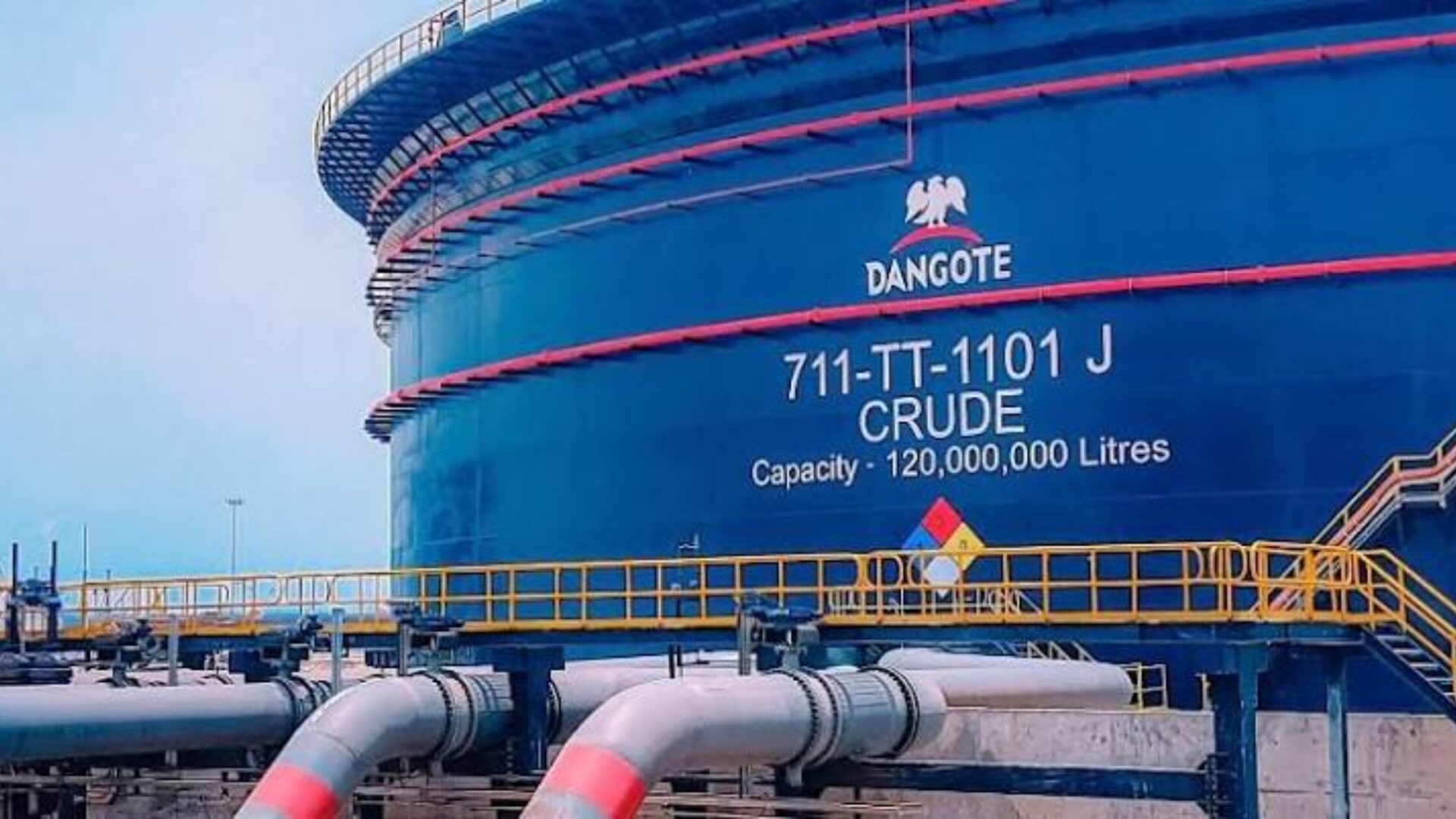
Dangote spent approximately $20 billion building this refinery specifically to solve that problem, and it is officially the largest single-train refinery in the world. So, you see that this is not just a small project, and you shouldn’t ignore this IPO.
Here are the key numbers you need to know: the refinery was commissioned in May 2023. Diesel and jet fuel production started in January 2024. Petrol production started in September 2024. As of February 2026, it reached its full nameplate capacity of 650,000 to 700,000 barrels per day. And now the company wants to increase it to 1.4 million barrels per day, which is one of the reasons for this IPO.
The projected annual export revenue right now is approximately $6.4 billion in hard foreign currency. This number is very important because we will come back to it when I explain the dividend.
THE IPO: KEY FACTS AND NUMBERS
Now let’s get into the actual IPO details. Here is everything confirmed as of right now:
Offer Price: The shares will be offered at ₦525 per share. At ₦525 per share, that translates to approximately $0.40 per share at current exchange rates.
Number of Shares Being Offered: 4.1 billion shares are being made available through this IPO. So make sure you get a part of those 4.1 billion shares.
Target Capital Raise: The IPO is targeting a net capital raise of between $1.55 billion and $1.8 billion. And in terms of US Dollars, it is going to be one of the largest capital raises ever attempted on an African exchange.
Valuation: Based on the recent private placement that was completed in July 2026, which was oversubscribed by the way, the refinery is now valued at between $40 billion and $50 billion. To give you a sense of scale, that’s larger than the entire market cap of most African stock exchanges.
Opening Date: The order book opens formally on September 14, 2026. That is when ordinary investors can begin subscribing for shares.
What the Money Is For: The primary proceeds from this IPO are for one specific purpose, which is doubling the refinery’s capacity from its current 700,000 barrels per day to 1.4 million barrels per day. That expansion would make it not just the largest refinery in Africa, but the largest in the world by a significant margin.
Regulatory Status: Nigeria’s Securities and Exchange Commission (SEC) has confirmed approval of the IPO application.
The next thing I want to talk about is the dividend you get from this.
>>RELATED: STOCK MARKET BOOK
THE DOLLAR DIVIDEND
Now I want to spend some time on what I think is the most talked about and most misunderstood aspect of this IPO: The US dollar dividend.
Here is what Dangote has proposed: Investors buy shares in Nigerian Naira, listed on the Nigerian Exchange like any other Nigerian stock. But the dividends, the profit distributions paid to shareholders, will be paid in US dollars. In summary, you buy in Naira, and you receive your dividend income in dollars.
Why is this possible? Because of that $6.4 billion in annual export revenue I mentioned earlier. The refinery exports petrochemicals and refined fuel to international markets and earns hard currency. That hard currency base is what makes dollar dividend payments financially viable for the company.
Why does this matter for investors?
For most Nigerians investing in Nigerian stocks, one of the biggest risks has always been naira devaluation. Even if a company is profitable and pays dividends in naira, if the naira loses significant value against the dollar, as it has done multiple times in recent years, your real purchasing power as an investor decreases.
A dollar dividend partially protects against that. The income side of your investment is denominated in hard currency, which holds its value regardless of what the naira does.
This has never been done before on the Nigerian Exchange. If it’s approved and executed, it would be a genuine first for Nigerian capital markets.
But here is the critical point I need to make very clearly: the dollar dividend has been publicly proposed and confirmed by Aliko Dangote himself, but it has not yet received formal approval from Nigeria’s SEC and the Federal Ministry of Finance. Until that formal approval is in writing, treat this as proposed, not guaranteed.
There is also something else you need to understand. Only the dividend is dollarized. The shares, the capital you invest, remain naira-denominated. So if you buy at ₦525 per share and the naira depreciates significantly, the naira value of your shares reflects that. The dollar dividend gives you income protection, not total currency protection on your full investment.
HOW TO BUY DANGOTE REFINERY SHARES
How do you actually participate? Let me walk you through the process.
If You Are in Nigeria, the most straightforward route is through a licensed stockbroker registered with the Nigerian Exchange. You can also use investment platforms and apps that offer NGX access, platforms like Cowrywise, Bamboo, Trove, and so on, as long as they support NGX IPO subscriptions, and almost all the stock investment apps in Nigeria offer this.
What you basically need to do is have your money ready, and then when the IPO opens on September 14, you will see it available on any app of your choice. I will also be making a tutorial video on that day to show you the step-by-step guide. So make sure you subscribe to the newsletter, join my Telegram channel and turn on the notification bell so you don’t miss it.
If You Are in the Diaspora or Outside Nigeria, including Nigerians in the diaspora and international investors, you can work directly with a licensed Nigerian stockbroker to help you do this. There are numerous licensed stockbrokers in Nigeria; I don’t want to recommend anyone, so you can search online for one.
Conclusion
Now, should you go ahead and buy it? I want to be honest with you. This is genuinely an exciting moment for Nigerian and African capital markets. A company of this scale, with this kind of revenue, going public for the first time – that doesn’t happen often.
But exciting does not mean risk-free. Remember, the markets go up and down, and IPOs are mostly overpriced. So invest wisely, don’t put all your money in at once, and ensure you do your research. Reading this blog post is also you doing your research.
Also, only invest what you can afford to leave invested for the long term. Don’t say you want to invest now and expect returns the following week. Make sure you understand everything I’ve covered in this blog post before you put a single naira into it.
If you found this helpful, please share it with anyone you know who is thinking about this IPO. This is information that a lot of people need right now, and I want to make sure it reaches them.
And if you are new to my blog, I have a series on YouTube where I recommend the top 10 stocks to buy every month on the channel, and it is free. and most of the time, these stocks end up with profits. So, if you don’t want to miss the top 10 stocks for next month, click this and subscribe and turn on the notification bell. Thank you.
>>MUST-READ: Best Investments Based on Your Income: What to Invest in at Every Income Level in 2026